Quick Summary:
- Central Illinois clay soil holds water long after rain events, and the region’s flat terrain gives groundwater nowhere to move quickly, making sump pumps a common need for homes across the service area.
- A sump pump collects groundwater that reaches the interior of your home’s footprint and removes it automatically before it can pool on the floor, but it works best as part of a larger drainage strategy.
- Signs a home likely needs a sump pump include recurring floor moisture after rain, persistent musty odor, low-lying lot location, older construction without existing drainage, finished basement space, and an aging pump that hasn’t been inspected recently.
- Without a sump pump, central Illinois homes face mold growth, foundation wall damage from clay soil pressure, wood rot in crawl spaces, and damage to finished basement space.
- Force Basements offers free inspections across Peoria, Bloomington, Springfield, Champaign, the Quad Cities, Decatur, Quincy, and LaSalle/Peru, and carries an A+ rating with the Better Business Bureau.
Do I Need a Sump Pump? A Guide for Central Illinois Homeowners
You notice a damp smell after a heavy rain. Maybe there’s a thin film of water near the base of the wall, or the floor feels slightly wet in one corner but dries up after a day or two. You’ve heard about sump pumps, but you’re not sure if your situation is bad enough to warrant one, or if you’d just be spending money on a problem that isn’t really there.
This is a common position for homeowners across central Illinois. The region’s clay-heavy soil holds water long after rain events, and much of the area sits on flat terrain with limited natural drainage. Problems that seem minor in a dry summer can look very different after a wet March. Understanding what a sump pump actually does, and when a home genuinely needs one, helps you make a better decision before the water makes it for you.
What a Sump Pump Actually Does
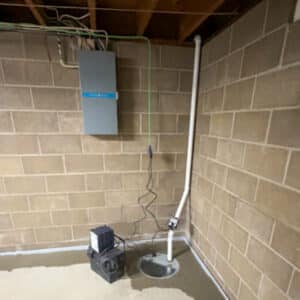
A sump pump sits in a pit dug at the lowest point of your basement floor. As groundwater rises around your foundation, it flows into that pit through a drain system or directly through the gravel bed beneath the slab. When the water reaches a set level, the pump kicks on automatically and pushes it out through a discharge line that runs away from the house.
That’s the whole job. A sump pump doesn’t waterproof your walls, seal cracks, or stop water from entering your foundation. It manages water that has already reached the interior of your home’s footprint and removes it before it can pool on the floor. This distinction matters because homeowners sometimes install a pump expecting it to solve a problem it wasn’t designed to handle, or skip one entirely when it’s exactly what their situation calls for.
A pump works best as part of a larger drainage strategy. In many central Illinois homes, that means pairing it with an interior drain tile system that collects water along the perimeter of the basement floor and channels it toward the pit. Without that collection system, a pump sitting alone in a pit can only respond to water that finds its way there on its own, which may not be enough in a home with active seepage along the walls.
Signs Your Central Illinois Home Probably Needs a Sump Pump
Several conditions point fairly clearly toward a sump pump being the right solution. A specialist will confirm during an inspection, but these are the situations where a pump is most commonly recommended for homes in this region.
- You get water on the floor after heavy rain or snowmelt. Even if it dries up on its own, water reaching the basement floor means groundwater is already getting past your foundation. A sump pump gives it somewhere to go before it spreads or causes damage.
- Your basement has a musty smell that won’t go away. Persistent moisture odor usually means water is present more often than you realize, even if you rarely see standing water. That humidity has to come from somewhere, and in central Illinois homes, it’s often groundwater migrating through the slab or lower wall.
- Your home sits in a low-lying area or near a drainage ditch. Flat terrain throughout much of the region means water has nowhere to move quickly after a storm. Homes at the bottom of a slope or near a creek or retention area are especially vulnerable to rising groundwater.
- Your home was built before the 1980s and has never had a sump pump installed. Older construction in Peoria, Springfield, Bloomington, and surrounding communities often predates modern drainage standards. Many of these homes were built without any system to manage groundwater beneath the slab.
- You’re finishing or have already finished your basement. Any investment in flooring, drywall, or mechanicals below grade is at risk without active water management. A sump pump is typically one of the first recommendations before a basement finishing project moves forward.
- Your existing pump is more than ten years old. An aging pump that hasn’t been inspected recently may be working fine now but running close to the end of its reliable service life. If the system hasn’t been evaluated in years, that’s worth knowing before the next heavy rain season.
A sump pump isn’t the answer to every wet basement, but for homes showing more than one of these conditions, it’s usually part of the conversation a specialist will want to have.
What Can Happen When a Central Illinois Home Has No Sump Pump
Water that has no managed exit point doesn’t stay in one place. It spreads, wicks into concrete, and finds its way into every porous material it contacts. For central Illinois homeowners dealing with recurring groundwater pressure, the consequences of going without a sump pump tend to compound over time.
- Mold growth. Persistent humidity from repeated moisture intrusion is enough for mold to establish itself in drywall, wood framing, and stored belongings, even without standing water.
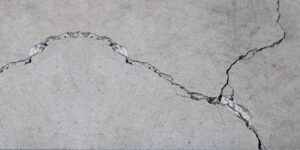
- Foundation wall damage. Central Illinois clay soil expands when saturated and contracts when dry. That cycle pushes against basement walls season after season, contributing to bowed walls, horizontal cracks, and floor cracks that worsen over time.
- Wood rot and structural damage in crawl spaces. Floor joists and beams that stay damp begin to rot and lose integrity, which eventually shows up as soft or sagging floors above.
- Damage to finished basement space. Flooring buckles, drywall deteriorates, and any investment in a finished lower level is at risk every time groundwater rises.
The cost of a sump pump installation is typically far less than the repairs that follow when water goes unmanaged through multiple wet seasons.
Talk to a Specialist Before the Next Wet Season
If your basement shows any of the signs covered here, the right next step is an inspection from someone who can evaluate the full picture. Groundwater problems in central Illinois homes are rarely one-dimensional, and a specialist can identify not just whether a sump pump makes sense, but where it should be placed, whether a drainage system needs to accompany it, and what else may be contributing to the problem.
Force Basements has been serving homeowners across Peoria, Bloomington, Springfield, Champaign, the Quad Cities, Decatur, Quincy, and LaSalle/Peru since 2020, and carries an A+ rating with the Better Business Bureau. Inspections are free, and there’s no obligation to move forward until you understand exactly what your home needs.
Schedule a free inspection with Force Basements and get a written estimate before the next heavy rain season arrives.