
Concrete Leveling

Concrete Leveling in Central Illinois
Concrete settles. It happens on nearly every property in Central Illinois, where clay-heavy soil expands in wet seasons and shrinks in dry ones, and where freeze-thaw cycles work on the ground beneath slabs every winter. A driveway panel drops half an inch. A sidewalk joint heaves. A patio slab tips toward the house instead of away from it. Most homeowners patch the crack and move on, not realizing the slab itself has moved.
Force Basements lifts settled concrete slabs for homes and businesses across Central Illinois. Driveways, sidewalks, porches, patios, pool decks, garage floors, and basement floors are all surfaces we work on. If the slab has sunk but is otherwise structurally intact, leveling it is faster and far less expensive than replacement.
What Causes Concrete to Sink?
Settled concrete is almost always a soil problem, not a concrete problem. The slab itself is usually fine. What fails is the ground underneath it.
In Central Illinois, the most common culprit is soil erosion. Water moves through joints and cracks in the concrete, carrying fine particles of soil with it as it drains. Over time, that process hollows out the base beneath the slab. Once enough material has washed away, the concrete has nothing left to rest on and begins to drop. Properties near the Illinois River in the Peoria area are particularly familiar with this pattern, where river-adjacent soils tend to be loose and prone to movement under and around concrete flatwork.
Soil composition plays a role throughout the region. Much of Central Illinois sits on expansive clay and glacial till, the kind of material common across the Bloomington-Normal corridor and into Springfield. That soil absorbs moisture and swells, then dries out and contracts. Slabs poured on poorly compacted fill are especially vulnerable, since that material was never stable to begin with.
Winter makes things worse. When water gets beneath a slab and freezes, it expands and pushes the concrete up. When it thaws, the slab drops back down, sometimes not quite where it started. After enough seasons, that repetition adds up.
Signs Your Concrete Needs Leveling
Settled concrete usually gives visible warning well before it becomes a serious problem. Common signs include:
- A slab that sits lower than the ones around it, creating a raised edge at the joint that is a trip hazard for anyone walking the surface
- A driveway, porch, or patio that slopes toward the house instead of away from it
- Water pooling on or near a slab after rain, particularly near a garage apron, foundation, or basement stairwell
- Cracks along slab edges or at joints where one panel has dropped relative to another, especially diagonal cracks that widen toward one corner
Illinois winters compound most of these issues. Ice collects in low spots and at raised joints, turning a manageable trip hazard into a genuinely dangerous one. Water that pools near the foundation in fall has all winter to work its way in.
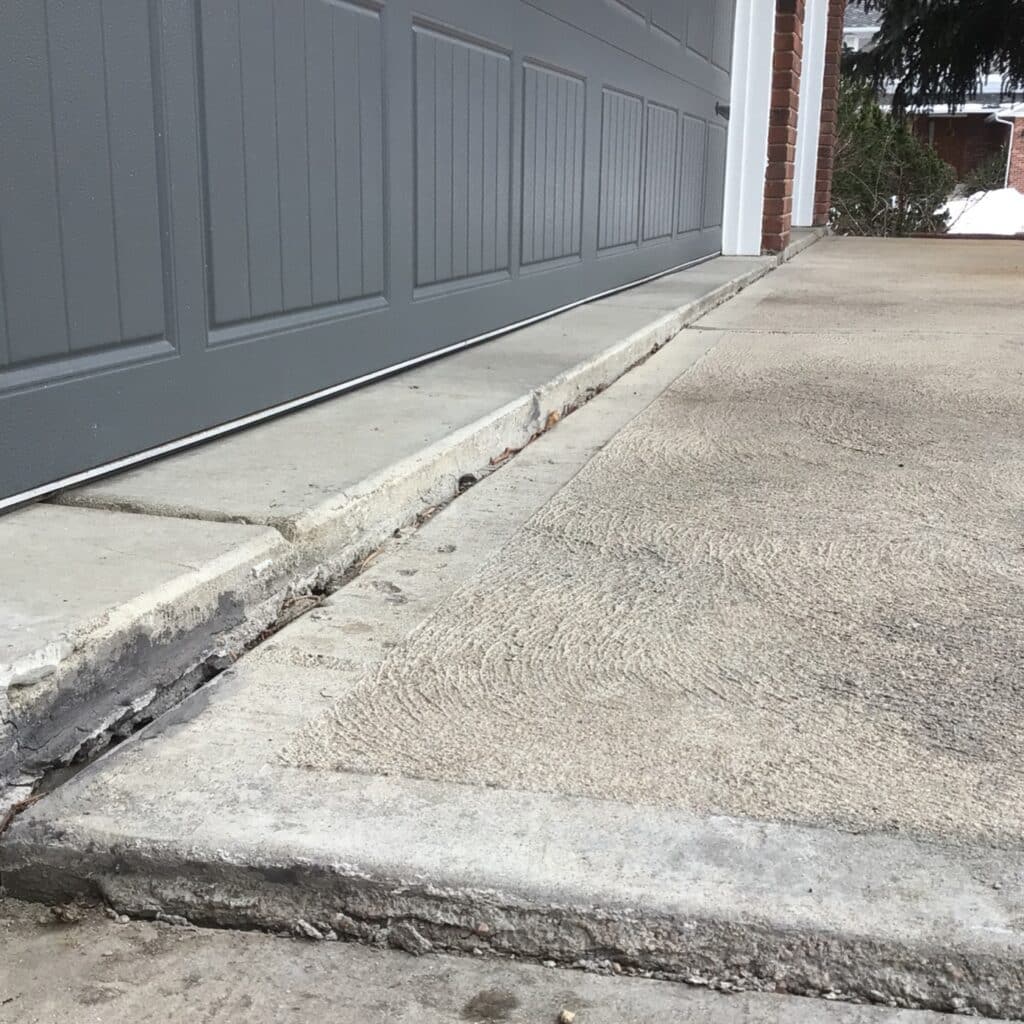
Polyjacking vs. Mudjacking: Which Method Does Force Basements Use?
There are two common methods for lifting settled concrete, and they are not equivalent. Understanding the difference matters, especially in Central Illinois where soil conditions and seasonal moisture swings put extra demands on whatever is holding a slab in place.
Mudjacking has been around for decades. A slurry of water, soil, and cement is pumped through holes drilled in the slab, and the pressure of that material lifts the concrete back toward level. It works, but the material is heavy, which adds load to soil that is already struggling to support the slab. It is also porous, meaning it can erode over time as water moves through the ground beneath the concrete.
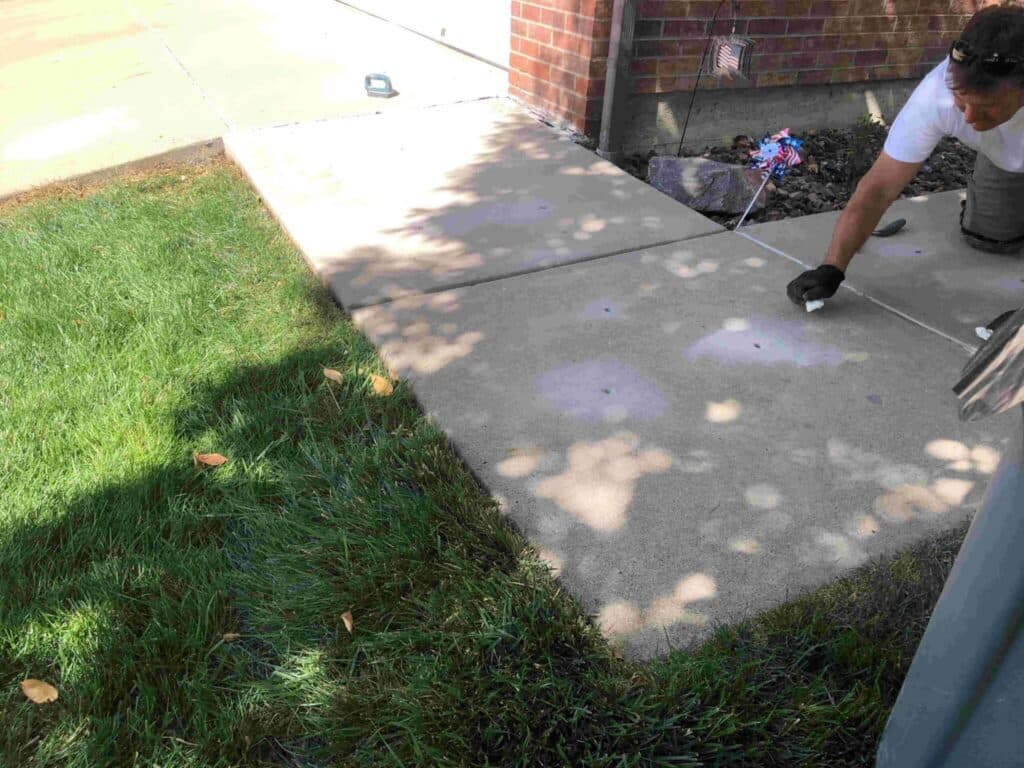
Polyjacking uses high-density polyurethane foam instead. Small holes are drilled in the slab, and the foam is injected beneath it. As it expands, it fills voids in the soil and lifts the concrete. The foam is lightweight, waterproof, and does not break down. It cures fast enough that most surfaces can be walked on within an hour and driven on the same day.
Force Basements uses polyjacking. For the soil conditions common across Peoria, Bloomington, Springfield, and the surrounding communities, it is the more durable choice.
Why Concrete Leveling Beats Full Replacement
Replacing a concrete slab is disruptive, expensive, and in many cases unnecessary. When the slab itself is sound, tearing it out to pour new concrete solves the surface problem without addressing what caused the settlement in the first place. The new slab sits on the same soil, with the same voids, and the same conditions that allowed the original to sink.
Leveling addresses the void directly. The foam fills the space beneath the slab, restores support, and lifts the concrete back into position without demolition, without hauling debris, and without a multi-day cure window before the surface is usable again.
The cost difference is significant. Full slab replacement involves breaking out and disposing of the existing concrete, forming and pouring new material, and waiting for it to cure. Leveling typically takes a few hours. The drilling leaves small holes that are patched after the lift, and the surface is back in service the same day.
There are cases where replacement is the right call. A slab that is badly cracked, crumbling, or has deteriorated beyond structural integrity is not a good candidate for leveling. Force Basements will tell you which situation you are dealing with after an inspection, not before.
Get a Free Concrete Leveling Estimate in Central Illinois
If you have a settled slab on your property, the inspection is free. Force Basements serves homeowners and businesses across Peoria, Bloomington, Springfield, the Quad Cities, Champaign, Decatur, Quincy, and LaSalle-Peru. Request an estimate online and someone from our team will be in touch to schedule a time.
See What Our Customers Are Saying!
- Aric and Jesse were always courteous and professional, and their work was top-notch! Thanks for a job well done!Corey M.Foundation Repair in Bloomington, IL