Which One Do You Really Need?
When water shows up in your basement, whether it’s a musty smell, damp walls, or standing water after a storm, the first question is always the same: How do I stop this from happening again?
Most people hear about two options: exterior waterproofing, which involves digging around the outside of the foundation, or interior systems, which are installed from inside the basement. Both methods can solve water problems, but they’re not equal in cost, disruption, or long-term maintenance.
At Force Basements, we’ve waterproofed homes and commercial buildings all over Central Illinois. We know what works and what doesn’t, especially with our region’s clay-heavy soils, freeze-thaw cycles, and high water tables. In this comparison, we’ll walk you through how each method works, where it fits, and why we trust interior systems for most basement repairs.
What Is Exterior Basement Waterproofing?
Exterior waterproofing is designed to keep water out by stopping it before it reaches your foundation walls. This usually means digging down to the footings, applying a sealant to the outside of the foundation, and installing a drain system to redirect water away from the home.
It’s a method that works, but it comes with serious disruption, especially if you have patios, landscaping, or walkways around your home.
Here are some of the most common components of an exterior waterproofing system:
- Excavation around the entire perimeter of the foundation
- Application of a waterproof membrane or coating
- Installation of footing drains or exterior French drains
- Drainage board or protective layers are placed against the foundation wall
- Backfill with gravel and regrading to direct surface water away
While exterior systems can be effective when properly installed, they tend to be expensive and harder to maintain. Accessing them later for repairs usually means digging everything up again.
What Is Interior Basement Waterproofing?
Interior waterproofing doesn’t try to stop water before it gets in. Instead, it manages it quickly and cleanly from the inside. This method is designed to relieve pressure from the outside and move water safely away from your basement without the need for excavation.
It’s the system we use most often at Force Basements because it works and because it’s easier on your home, your yard, and your budget.
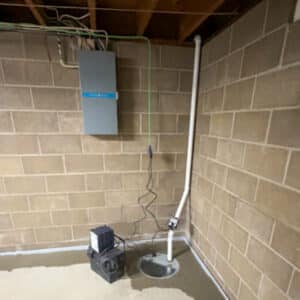
Here’s what an interior waterproofing system typically includes:
- Drainage channels or piping are installed along the interior perimeter
- A sealed sump basin with a high-volume sump pump
- An optional battery backup system in case of power outages
- Wall vapor barriers or liners to control moisture and direct it into the system
- Dehumidifiers to keep humidity levels down and prevent mold
Interior waterproofing is especially effective for homes in Central Illinois, where shifting soil and water tables put constant pressure on basement walls and floors. It doesn’t require digging, and it’s easy to access for maintenance down the road.
Interior vs. Exterior Waterproofing: Side-by-Side Comparison
Not sure which waterproofing method makes more sense for your home? Here’s how interior and exterior systems compare across the key factors:
| Category | Exterior Waterproofing | Interior Waterproofing |
| Installation Method | Requires full excavation around the foundation to apply coatings and install drains. | Installed inside the basement using drainage channels, a sump pump, and vapor control. |
| Disruption | Major disruption to landscaping, patios, driveways, and property access. | Minimal mess. Work stays inside the home and doesn’t affect the exterior. |
| Cost | Higher cost due to equipment, labor, and site restoration. | Lower overall cost with less labor and no excavation. |
| Control of Water | Blocks water at the exterior surface of the foundation. | Collects and redirects water before it reaches the basement floor. |
| Timeline | May take several days or longer, depending on access and soil. | Most interior systems are installed in 1–2 days. |
| Maintenance | Harder to inspect or repair without re-excavating. | Easy to access and maintain from inside the home. |
| Ideal Use Case | Best for new builds or when foundation excavation is already needed. | Best for existing homes with water seepage, damp walls, or drainage issues. |
Which Option Is Right for Your Home?
There’s no one-size-fits-all answer when it comes to basement waterproofing, but for most homes in Central Illinois, interior systems are the more practical solution. They’re faster to install, easier to maintain, and far less disruptive than digging up the outside of your foundation.
Exterior waterproofing may be a good fit for new construction or major renovation projects where the foundation is already exposed. But for homeowners dealing with basement seepage, wet walls, or pooling water, interior waterproofing does the job without tearing up your yard or your budget.
At Force Basements, we always start with a proper inspection. We’ll figure out where the water is coming from, explain your options clearly, and help you choose the right fix for your home and not just the most expensive one.
Let’s Solve Your Basement Water Problem For Good
If your basement is leaking, damp, or just not feeling right, we’re here to help. At Force Basements, we’ve built our reputation on doing the job right with straightforward solutions, honest recommendations, and a team that shows up ready to work.
Whether you’re just starting to research waterproofing or you’ve already tried a fix that didn’t hold, we’ll take a look, walk you through your options, and build a system that lasts.
Schedule your free inspection today and let our crew help you take back your basement with no pressure, no hard sell, just answers.